

Directing techniques in modern cinema have become one of the most influential factors shaping both visual language and the narrative experience of film. While classical cinema relied more on linear storytelling, direct narrative structures, and clearly defined genre conventions, modern cinema attempts to convey deeper layers of meaning through imagery, mise-en-scène, lighting, and editing rhythm. In this new approach, the image is no longer merely a tool for presenting the story; it becomes an integral part of the narrative itself, actively engaging the audience in the process of meaning-making.
In such a context, the role of the director is more prominent than ever. Directing in contemporary cinema is no longer limited to guiding actors or managing scenes; it is a creative process aimed at designing the viewer’s visual and emotional experience. Choices such as camera angle, framing, camera movement, color composition, and even the silence between dialogues can influence the mood and meaning of a film as much as the story itself. For this reason, many modern films rely less on dialogue and more on visual storytelling and cinematic symbols to communicate ideas.
On the other hand, the evolution of digital technologies and production tools has given today’s directors far greater possibilities for creating visual worlds. Advanced editing software, visual effects technologies, and digital set design tools allow filmmakers to construct more complex narratives and unique visual environments. As a result, cinematic language has gradually evolved into a combination of visual aesthetics, narrative rhythm, and sensory audience experience.
In recent years, the introduction of artificial intelligence into filmmaking has also opened new perspectives for directing. AI-based tools can assist in various stages of production, from script analysis and pre-visualization to editing and color correction. However, human creativity and a deep understanding of narrative and audience emotions remain the core elements behind the creation of lasting cinematic works. Therefore, studying directing techniques in modern cinema not only enhances our understanding of film language but also reveals how the combination of art, technology, and storytelling can create a unique and immersive experience for the audience.
Modern cinema refers to a period and approach in filmmaking in which form, visual language, and narrative structure have undergone a fundamental transformation compared to classical cinema. While classical cinema relied on clear storytelling, linear narratives, and definitive endings, modern cinema moves toward ambiguity, layered meanings, and active audience participation. In this approach, a film does not merely tell a story; instead, it creates a mental and emotional experience that the viewer must interpret and uncover.
Within the framework of cinematic language, modern cinema strives to turn the image into the primary storytelling tool. Therefore, when analyzing directing techniques in modern cinema, special attention must be given to changes in narrative structure, visual composition, and methods of conveying meaning.
One of the most important structural differences between classical and modern cinema lies in the evolution of film narrative. While many classical films rely on a linear and straightforward storyline, modern cinema tends to design narratives that are more complex, multi-layered, and sometimes non-linear.
This shift transforms the audience from a passive receiver of information into an active participant in the process of meaning-making and narrative reconstruction. The table below compares how linear storytelling in classical cinema evolves into a more layered and complex narrative structure in modern cinema.
| Narrative Feature | Classical Cinema (Linear Narrative) | Modern Cinema (Multi-layered Narrative) |
|---|---|---|
| Story Time Structure | A clear chronological order with a defined beginning, middle, and end | A fragmented temporal structure using flashbacks, flash-forwards, or non-linear storytelling |
| Information Delivery to the Audience | Story information is presented fully and clearly | Some information is hidden or omitted so the audience can discover it |
| Audience Role in Understanding the Story | The audience is mainly a passive receiver of the narrative | The audience must analyze the narrative and reconstruct its meaning |
| Narrative Complexity | Simple, cause-and-effect-driven storytelling | Multi-layered narratives with multiple possible interpretations |
| Story Ending | A clear, conclusive ending that fully resolves the narrative | An open or interpretive ending that encourages reflection |
In modern cinema, form is no longer merely a vessel for storytelling; it has itself become part of the content. Framing, lighting, color, camera movement, and even silence carry meaning. In other words, visual storytelling has gained a much stronger position, allowing images to convey a character’s psychological state or the atmosphere of a scene without relying on dialogue. For example:
In this approach, cinematic language is shaped through the combination of visual and audio elements, and the director designs the audience’s emotional experience by controlling these components. Therefore, any analysis of modern cinema would be incomplete without examining its visual structure.
Another key feature of modern cinema is the shift away from direct expression toward subtext. In classical cinema, motivations, emotions, and conflicts are often explicitly stated. In modern cinema, however, much of the meaning is embedded within the hidden layers of imagery and character behavior. In modern cinema, the following elements gain particular importance:
This shift turns the audience into an active interpreter rather than a passive viewer. Instead of simply consuming the film, the audience experiences and decodes it. Such an approach is a core principle of modern cinema analysis and further emphasizes the role of the director as an architect of visual language.
In modern cinema, directing is no longer limited to managing scenes or guiding actors. Instead, it involves a set of creative decisions related to visual language, cinematic storytelling, and the design of the audience’s experience. Directors use various elements such as mise-en-scène, framing, camera movement, lighting, color, and editing rhythm to shape the hidden layers of the story and guide the audience’s emotions. Therefore, when analyzing directing techniques in modern cinema, attention to these elements is essential, as each of them contributes to visual storytelling and the narrative depth of the film.
The following sections explore the most important techniques contemporary directors use to create a film’s visual and narrative identity.
Mise-en-scène is one of the most fundamental tools of cinematic directing, referring to the arrangement of elements within the frame, the positioning of characters, and the overall design of the scene. In modern cinema, mise-en-scène is not merely an aesthetic choice; it directly participates in storytelling.
The placement of characters within the frame, the distance between them, and even the objects within the scene can communicate emotional relationships, tensions, or the psychological state of the characters. The relationship between space and emotion is also crucial; for example, the use of large, empty spaces can intensify feelings of loneliness or alienation.

Framing and image composition are among the key elements in shaping cinema’s visual language. By selecting the type of frame and arranging visual elements within the shot, a director can guide the audience’s attention or even create specific emotional effects such as balance, tension, or instability.
The use of symmetry or asymmetry, applying compositional principles such as the rule of thirds, and controlling negative space are among the techniques that enhance visual storytelling. In many modern films, framing is used not only to present the subject but also to convey meaning and establish a particular emotional atmosphere.
Camera movement is one of the most powerful tools for shaping the audience’s emotional experience. In modern cinema, the type of camera movement is often aligned with the psychological state of the characters or the atmosphere of the story. For example, a static camera can create a sense of tension or anticipation, while smooth and continuous movements allow the audience to develop a stronger emotional connection with the characters. On the other hand, handheld or shaky camera work is often used to evoke realism, chaos, or psychological instability.
Lighting in modern cinema is not merely used to illuminate a scene; it is a tool for creating emotional and symbolic layers. Many contemporary films rely on natural lighting or low-contrast setups to achieve a greater sense of realism. In contrast, shadows and strong lighting contrasts can create mysterious or tense atmospheres. The distribution of light within a frame can also contribute to character development; for instance, placing part of a character’s face in shadow may suggest inner conflict or psychological complexity.
Color is one of the most influential elements in shaping a film’s visual identity. Many directors in modern cinema use a limited color palette to create a more cohesive visual atmosphere. Colors can function as emotional cues; for instance, cool tones may convey a sense of distance or isolation, while warm tones can enhance feelings of intimacy or tension. The use of color also varies across different genres and can contribute significantly to the overall narrative atmosphere of a film.
Editing plays a crucial role in defining narrative rhythm and guiding the audience’s emotional response. In modern cinema, directors often use a variety of editing rhythms to create different experiential effects. Slow, extended cuts can reinforce contemplation, suspense, or solitude, while fast-paced editing is typically used to generate tension, excitement, or chaos. In addition, the style and timing of cuts can direct the viewer’s attention and shape the emotional progression of the narrative.
Directing actors is one of the most delicate aspects of filmmaking. In many modern films, performances tend to lean toward minimalism and introspection, with emotions conveyed primarily through body language, gaze, and silence.
A director must ensure harmony between the actors’ performances and the film’s visual style so that the narrative feels natural and believable. Subtle movements, pauses, and interactions between characters can have a profound impact on how the audience perceives both the story and its emotional atmosphere.
In modern cinema, visual style is not used merely to beautify the image or create visually striking effects. In fact, many contemporary directors employ visual elements as an integral part of cinematic narrative. Framing, lighting, color, mise-en-scène, and even silence within the image can convey information that is never expressed through dialogue.
Therefore, when analyzing directing techniques in modern cinema, it becomes clear that visual aesthetics often function as a tool for conveying meaning, emotion, and subtext. In simple terms, in modern cinema, the image itself becomes the narrative.
Conveying Meaning Without Dialogue
In many modern films, essential narrative information is communicated through visuals rather than dialogue. A brief glance, the spatial distance between characters within the frame, or even a prolonged silence can reveal emotions, conflicts, or psychological states more effectively than direct speech.
Creating Subtext Through Imagery
Visual elements such as objects, spaces, or scene composition can generate hidden layers of meaning. For example, the repeated presence of a specific object or placing a character within a particular environment may symbolically reflect their inner state and contribute to the formation of narrative subtext.
The Relationship Between Framing, Color, and Characterization
Framing style, color palette, and lighting can all provide important information about characters. Cool tones may suggest isolation or emotional distance, while warm lighting can evoke intimacy or safety. In this way, visual elements become part of the character-building process.
Transforming Aesthetics into a Narrative Tool
In modern cinema, visual aesthetics are not used solely for visual appeal; they directly serve the narrative. A defined visual style; from camera movement to color design and lighting; can shape the film’s atmosphere, narrative rhythm, and emotional experience, ultimately adding depth to the storytelling.
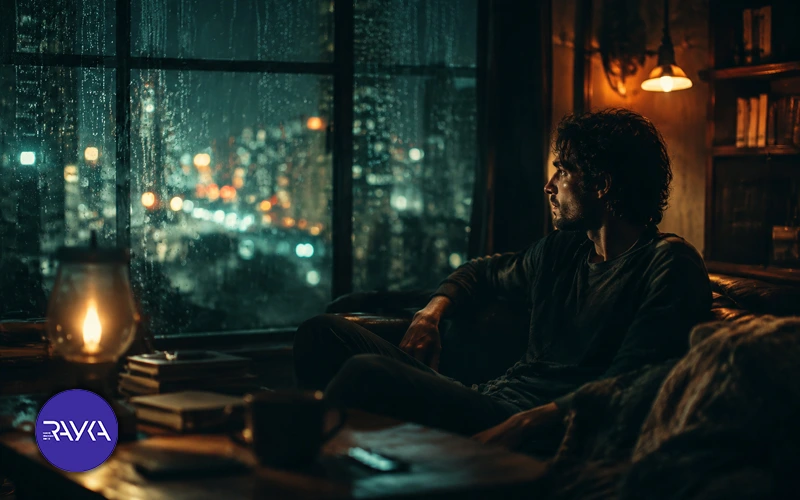
In modern cinema, many directors strive to develop a distinct personal style in their films; a style that gradually becomes a Visual Signature. This signature is a set of recurring choices in framing, color, camera movement, mise-en-scène, and editing rhythm, which makes a director’s work recognizable even without seeing their name.
In analyzing directing techniques in modern cinema, examining these visual patterns is essential, as they reveal how filmmakers use cinematic language to express their worldview and artistic perspective.
One of the key characteristics of prominent filmmakers in modern cinema is having a unique visual style. This style emerges from a series of creative decisions in visual design, storytelling, and atmosphere-building that consistently appear across their works. As a result, audiences and critics can sometimes identify a director’s film after seeing only a few shots. This recognizability is usually the outcome of years of experience, experimentation, and the gradual formation of a personal cinematic language.
To develop a visual signature, many directors rely on a set of recurring elements in their films. Over time, these elements become part of their visual identity and play an important role in creating stylistic consistency.
A visual signature is not merely an aesthetic feature; it reflects a director’s artistic identity and worldview. Choices in framing, color, or camera movement are often closely linked to how a filmmaker perceives human, social, or philosophical themes. As a result, visual style helps audiences better understand the tone, themes, and intellectual atmosphere of a film. In many cases, viewers connect with a filmmaker’s inner world precisely through these visual elements.
In modern cinema, narrative depth is not created solely through complex storytelling. Instead, it emerges from the combination of visual narration, production design, narrative rhythm, and the audience’s active engagement with the film. Many contemporary directors aim to avoid direct explanation of ideas and instead use imagery, silence, and narrative structure to build layers of meaning.
This approach transforms the viewer from a passive observer into an active participant in the process of discovering and interpreting the story. The table below illustrates the key methods used in modern directing to create narrative depth:
| Narrative Technique | Implementation in Modern Directing | Impact on Audience Experience |
|---|---|---|
| Character Development Through Visuals | Using framing, lighting, color, and mise-en-scène to reveal characters’ psychological states and identities | Understanding characters without the need for direct explanation or long dialogue |
| Use of Emptiness, Silence, and Pauses | Creating moments without dialogue or movement to emphasize emotions and inner tension | Increasing audience focus on visual details and hidden emotions |
| Indirect and Multi-layered Narrative | Hiding parts of the story information and using symbols or visual cues | Creating interpretive layers and enhancing the film’s thematic depth |
| Tension, Ambiguity, and Active Audience Engagement | Using open endings, incomplete information, and non-linear narrative structures | Encouraging analysis, interpretation, and intellectual participation from the audience |
In recent years, the introduction of artificial intelligence (AI) into the filmmaking industry has brought significant transformations to both creative and technical processes. AI-based tools can now assist directors and production teams at various stages of film production. These technologies have not only accelerated content creation but also enabled the exploration of visual ideas, the design of complex scenes, and improved management of visual storytelling.
However, the use of AI in cinema is not merely a technical tool; it also influences directing techniques, visual language, and narrative methods. As a result, many film analysts believe that the future of directing will be a combination of human creativity and the analytical and generative capabilities of artificial intelligence.
In the pre-production stage, AI can help directors make creative decisions and production planning with greater speed and accuracy.
AI also plays an important role in shaping the visual language of films during production. It enables filmmakers to create complex environments and imagery with reduced cost and time.
In the post-production stage, AI has also become an important tool for optimizing editing workflows and image refinement.
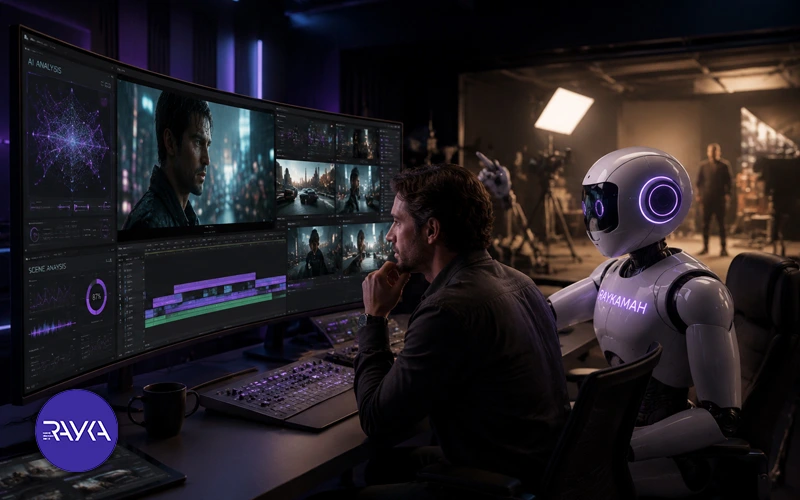
Despite significant advances in artificial intelligence, the role of the director remains central to the filmmaking process. This is because many creative aspects of cinema still depend on human understanding of emotion, culture, and storytelling.
In a world where artificial intelligence technologies are rapidly transforming content production processes, the advertising agency Raykamah strives to place this technology in service of human creativity. By focusing on visual content production and the intelligent use of modern tools, Raykamah helps brands and content creators transform their creative ideas into visual form more quickly and effectively.
In this approach, artificial intelligence is not seen as a replacement for creativity, but as a tool that enhances the creative process. The combination of data analysis, visual generation tools, and human experience can lead to content that is both technically advanced and narratively engaging.
If you are looking to use modern technologies intelligently in the production of visual, advertising, or video content, you can benefit from Raykamah’s services and see how the combination of AI and human creativity can elevate both the quality and speed of content production to a new level.
Directing in modern cinema is no longer limited to technical scene management or guiding actors; it is a multi-layered and highly creative process in which the director uses visual language, mise-en-scène design, lighting, color, camera movement, and editing rhythm to create an emotional and meaningful experience for the audience. In this approach, every visual decision can become part of the narrative, and every cinematic element contributes to building the story world. Therefore, any analysis of contemporary films without considering visual structure and directing techniques would be incomplete.
In modern cinema, visual style and narrative depth are two sides of the same coin. Visual aesthetics are no longer used merely for surface appeal; instead, they function as tools for conveying meaning, creating subtext, and shaping character development. Framing, lighting, and color not only define a film’s visual identity but also play a crucial role in generating interpretive layers and encouraging active audience engagement. In other words, narrative in modern cinema often emerges from within the image itself.
In this context, artificial intelligence, as one of the most significant developments in the contemporary film industry, has provided powerful tools for pre-production, production, and post-production. However, what ultimately gives a film its meaning, coherence, and emotional impact still depends on human artistic judgment and understanding. Thus, while modern technologies can optimize the production process, they cannot fully replace the creative vision of the director. Ultimately, the study of directing techniques in modern cinema reveals that the future of filmmaking lies not in the removal of the human element, but in the intelligent collaboration between human creativity and advanced technologies.