
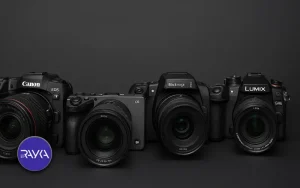
Choosing the right camera is one of the most important decisions for beginner filmmakers, as it directly impacts the quality and success of their projects. In 2025, the camera market has undergone remarkable changes thanks to modern technologies such as artificial intelligence and advanced imaging capabilities. Anyone stepping into filmmaking should understand what features make a camera suitable for beginners and how to choose the best option based on budget and project needs. In this article, we will explore the best cameras, their key features, compare hybrid vs. traditional cameras, and share cost-saving tips to help you make the right decision.
To select the best camera for starting out in filmmaking, you need to consider features that guarantee both quality and usability. These factors not only affect the final output but also make the filming process easier and more professional. Here are the essential features:
One of the most common questions in filmmaking is whether to choose a hybrid mirrorless camera or a traditional DSLR. Both have their advantages and disadvantages, depending on the project type and shooting style.
To make this clearer, we’ll compare the key features of both types of cameras in the table below.
| Feature | Mirrorless Camera | DSLR Camera |
|---|---|---|
| Image Quality | Excellent, often comparable to DSLR | Excellent, especially in professional models |
| Low-Light Performance | Very good, thanks to modern sensors | Good, but usually slightly weaker than mirrorless |
| Autofocus Speed | Very fast and accurate | Fast, but generally slower than mirrorless |
| Weight & Size | Lighter and more compact | Heavier and bulkier |
| Lens Variety | Fewer options compared to DSLR | Wider and more diverse selection |
| Battery Life | Shorter, due to electronic viewfinder | Longer, thanks to optical viewfinder |
| Price | Usually slightly more expensive | More budget-friendly options available |
| Video Capabilities | More advanced, with better filmmaking features | Decent, but generally more limited |
Reducing film production costs is a major concern for both beginner and professional filmmakers. Today, the use of modern technologies—especially AI-powered filmmaking—offers numerous opportunities to cut expenses. These technologies streamline complex processes such as editing, visual effects, sound design, and even content creation, making them faster and more economical.