
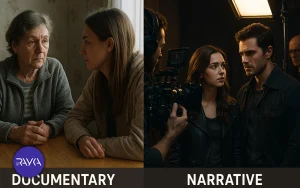
Documentary and fiction films are two main branches of cinema, each with a different approach to storytelling, purpose, and impact on the audience. Understanding their differences helps us gain a deeper insight into the concept of “reality and imagination in cinema.”
In the world of cinema, everything moves between two major poles: reality and imagination. A documentary film is an attempt to present the truth, while a fiction film is built on an imagined narrative. Understanding the difference between documentary and fiction films is important for enthusiasts, film students, and even general audiences, as each type of film has its own unique perspective and effect on human emotions and thinking. In this article, we will analyze these two types of films and their characteristics in a simple way to clarify their differences.
A documentary film is a work that presents reality without fiction or a pre-written screenplay, and its main purpose is to inform and record the truth.
A documentary film (Documentary Film) is a type of filmmaking based on real events. In documentaries, the subjects are real, and the narrative is drawn from real-life situations and occurrences. Instead of creating a fictional world, the documentary filmmaker aims to capture reality as it is and encourage the audience to think and become more aware.
The goals of documentary filmmaking can be educational, social, historical, or even environmental. Many documentaries investigate a specific topic and present it through visuals, interviews, and real narration. Unlike fiction films, documentaries usually do not follow a fixed screenplay, and during production, the narrative may evolve or change.
Before moving on to the differences, it is useful to take a closer look at the characteristics of documentary films. Each of these features shows why documentaries are so realistic, impactful, and different from fiction films. The main characteristics of documentary films are as follows:

A fiction film is a work that tells a story through a screenplay and professional actors, presenting an imaginary world or a re-created version of reality.
A fiction film (Fiction Film) is one of the most well-known types of cinema, built on imagination, screenplay, and precise directing. In this type of film, everything is planned in advance. Dialogue, set design, locations, and most importantly the story and subject are all organized before filming begins. The filmmaker aims to create a coherent narrative that evokes emotion, imagination, and excitement in the audience.
Fiction films can be produced in a wide range of genres, from drama and romance to action, science fiction, and horror. Their main purpose is entertainment and storytelling rather than documenting reality. These films usually feature detailed character development, carefully written dialogue, and professional set design.
Fiction films are made with a screenplay, precise directing, and the use of professional actors to create an imaginary yet believable world for the audience.
Fiction films are produced with careful planning and structure. In these works, everything is designed in advance; from the narrative path to the actors’ emotions. The director tries to take the audience on an emotional journey and present them with a fictional yet vivid world.
The main characteristics of fiction films are as follows:
The main difference between documentary and fiction films lies in the source of the narrative and the purpose of production. A documentary records reality, while a fiction film follows imagination and a scripted storyline.
If we have already explored the characteristics of each type of film, it is now time to move on to a direct comparison. Understanding the difference between documentary and fiction films helps the audience realize why the emotions, experiences, and messages of each are different, and when each type of film should be used. It also helps in following key principles when creating professional fiction films. In the table below, we will examine the most important differences.
| Criteria | Documentary Film | Fiction Film |
|---|---|---|
| Narrative source | Reality and real subjects | Imagination and screenplay |
| Purpose | Awareness, education, documentation | Entertainment, emotional impact |
| Subjects / characters | Real people or real-world topics | Professional actors and fictional characters |
| Structure | Flexible, may be non-linear | Planned and linear or screenplay-based |
| Director’s control | Observer and selector, less controllable | Full control over narrative and details |
| Visual tools | Interviews, archives, real footage | Staged locations, set design, visual effects |
| Production limitations | Dependent on reality, unpredictable | Fully planned and controllable |
| Cost | Usually lower | Usually higher |
| Audience impact | Trust and awareness | Empathy, excitement, and entertainment |
In cinema, the boundary between reality and imagination sometimes becomes blurred. Some films combine elements of both documentary and fiction to create a narrative that is rooted in reality but delivered in a more engaging, story-driven way. These films, known as docudramas or reenactment-based films, allow the audience to both confront real events and experience them in an emotional and narrative form. Examples of these types of films include:
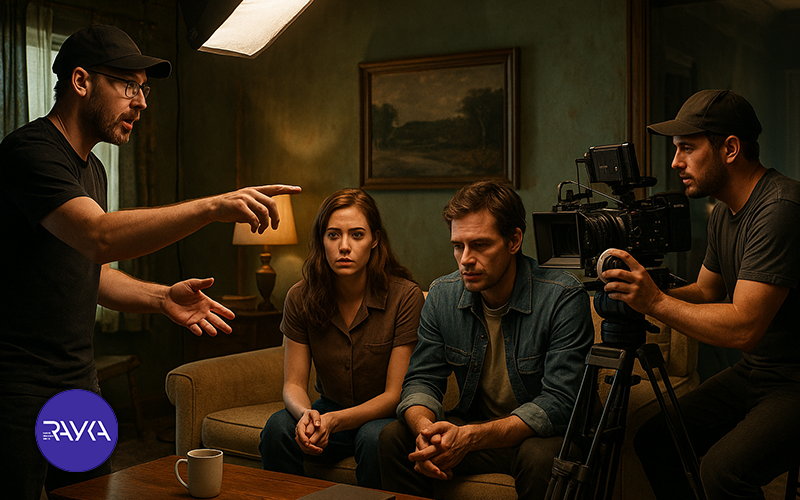
Documentary films influence the audience through awareness and trust, while fiction films evoke emotions and empathy.
Every type of film, whether documentary or fiction, affects the audience’s mind and emotions, but their modes of impact are different. Documentaries provide viewers with trust and factual information, encouraging them to think critically. In contrast, fiction films, through imaginary storytelling, relatable characters, and emotional situations, entertain the audience and create a more emotional experience.
Documentary and fiction films each have distinct roles in media and advertising; documentaries present reality, while fiction films engage audiences through compelling storytelling.
In today’s world, media and advertising use both types of films to deliver messages in the most effective way. However, their impact and applications are different.
Use of documentaries in advertising:
Use of fiction films in advertising:
Documentary and fiction films each have their own characteristics, storytelling styles, and purposes. Documentaries present reality and provide reliable information, inviting the audience to think and analyze, while fiction films create imaginary worlds with relatable characters and a structured narrative to deliver an emotional and entertaining experience.
By understanding the difference between documentary and fiction films, audiences can better decide which type of film is more suitable for education, information, or entertainment. At the same time, content creators can communicate their messages more effectively by choosing the appropriate film type for their purpose.