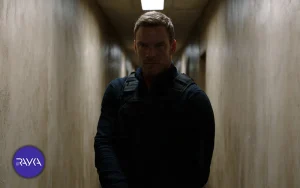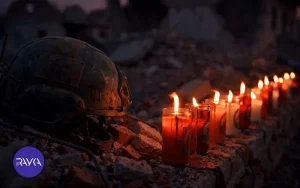

Beyond the Fire is one of Raykamah’s experiences in AI-powered filmmaking; a cinematic story that brings the world of firefighters and the intense moments of a firefighting operation to life. In this project, AI allowed us to create fire, smoke, emergency environments, human faces, and movement with a high level of detail and realism, using these elements to build a cohesive visual narrative.
Creating such visuals goes far beyond generating an appealing AI output. Maintaining natural-looking faces and movements, coordinating characters with their surroundings, controlling the behavior of fire, and ensuring visual consistency across shots all require careful planning and professional supervision. In this project, Raykamah combined AI with the filmmaking knowledge and experience of its team to turn the capabilities of this technology into a genuine cinematic experience.
Beyond the Fire captures moments when fire turns time into the most critical element of the scene. The firefighters find themselves at the center of a high-pressure situation, where every decision, every reaction, and every step can change the course of the incident.
The film unfolds amid flames, smoke, and the chaos of an emergency response, taking the audience into moments when firefighters must react within seconds. Here, the confrontation between humans and fire is more than a physical struggle; it reflects courage, focus, and decision-making in circumstances where maintaining control becomes more challenging than ever.
In Beyond the Fire, we aimed to create an environment that feels both intense and cinematic while remaining believable; from the firefighters at the heart of the operation to the lighting, smoke, flames, and visual details that bring the atmosphere of a real emergency to life.
One of the most important visual elements of Beyond the Fire was creating the fire scenes and recreating the environment of a firefighting operation. AI allowed us to design and produce flames, smoke, firelight, and the surrounding environment with a high level of visual detail. Together, these elements played a key role in creating the intense atmosphere of the film.
However, making fire look natural goes far beyond generating realistic-looking flames. The intensity and direction of the flames need to be coordinated with the smoke, the reflection of firelight on the surroundings, the characters’ positions, and camera movement. This coordination is essential for making the scene feel cohesive and believable. In Beyond the Fire, maintaining consistency between these elements was particularly important, as even a small visual mismatch could break the sense of realism.
AI made it possible to create and refine these complex elements with greater flexibility, but achieving the final result required careful shot selection, output control, and professional finishing. Ultimately, the real value of AI becomes clear when a specialized team can put its capabilities to work in service of storytelling, visual world-building, and cinematic language.
One of the key aspects of Beyond the Fire was creating firefighter characters with a level of realism that allowed them to feel natural and believable within the intense environment of the emergency. At this stage, AI was used for more than simply creating the characters’ appearance; it also enabled us to develop and refine their human details and movements across different situations.
Creating an appealing face or a realistic character with AI is only the starting point. When that same character needs to appear across multiple shots, move naturally, react to what is happening, and interact with an environment filled with fire and smoke, the process becomes far more complex.
In Beyond the Fire, character design, shot control, movement coordination, and refinement of AI-generated outputs all required human expertise and supervision. That is why achieving a believable cinematic result depends on more than the capabilities of the technology itself; it depends on the experience of a team that knows how to use AI in service of storytelling and visual direction.
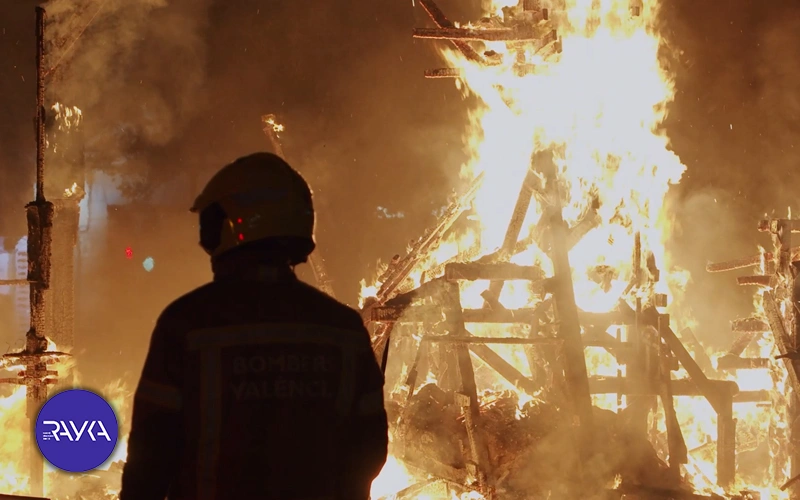
In Beyond the Fire, the goal was not simply for the audience to see the fire; it was to make them feel the atmosphere of a firefighting operation. That is why every environmental element in the scenes was designed as part of a unified visual system, creating a cohesive and believable world.
The building, street, and surroundings of the incident were designed according to the story and the context of each scene, allowing the environment to become part of the narrative. AI made it possible to create the locations needed for each shot without being limited to a real-world space, while maintaining the level of detail required for the story.
Smoke, emergency lights, and the reflection of firelight across the surroundings play an important role in conveying the feeling of a real emergency. Together, these elements add depth and visual tension to the scenes, helping the presence of fire extend beyond the flames themselves.
For a scene to feel believable, the environment cannot be designed independently of the characters and the fire. The firefighters’ positions, the direction of the light, smoke, and flames all need to be coordinated with the setting and camera movement so that every element feels like part of the same unified situation.
One of the key advantages of AI in this project was the ability to create and modify environments that could have required more locations, equipment, and production costs through traditional methods. This flexibility allowed the production team to shape each environment according to the specific needs of every shot.
AI is a powerful tool for creating visual worlds, but decisions about style, composition, lighting, output control, and visual continuity across shots still require human expertise. In Beyond the Fire, this process was guided by Raykamah’s specialized team, ensuring that AI-generated outputs served the film’s narrative and cinematic language.
The production of Beyond the Fire began with an initial idea and narrative, eventually evolving into a series of cinematic shots depicting a firefighting operation. Throughout the process, AI was used across different stages of production—from designing the emergency environment and characters to creating fire and bringing movement to life. However, turning these outputs into a cohesive film required careful selection, control, and professional refinement at every stage.
The first step was to shape the visual world of the film. The fire scene, emergency environment, building, and surrounding elements were designed according to the needs of each shot, establishing the overall atmosphere and cinematic tone of Beyond the Fire from the very beginning.
Once the story environment was established, the firefighter characters were designed. Their appearance, clothing, and facial features needed to be defined in a way that preserved their visual identity as consistently as possible across different shots, while ensuring that their presence within the narrative felt natural and believable.
Fire was one of the film’s central visual elements, which is why the process went far beyond simply adding flames to the frame. The flames, smoke, firelight, and the impact of the fire on the surrounding environment were designed and controlled according to the needs of each shot, ensuring a believable relationship between the fire, the environment, and the characters.
In the next stage, the designed characters were brought beyond the limitations of static images. Body movements, facial expressions, and the firefighters’ reactions in different situations were created, with their movements carefully coordinated with the emergency environment and the events taking place in each shot.
Once the shots had been generated and refined, selecting and combining them became a crucial part of the process. Camera angles, movement, shot sequencing, and visual continuity all needed to work together so that the generated visuals followed a unified narrative rather than becoming a collection of disconnected AI outputs.
In the final stage, the shots were brought together to establish the film’s rhythm and structure. The necessary refinements were made to the generated outputs to maintain consistency between the characters, environment, fire, and movement, bringing the final result closer to the visual language of a cinematic film.
Beyond the Fire is not the result of using a single tool; it is the outcome of multiple production stages combined with creative and technical decisions. In this project, Raykamah integrated AI with the expertise of its production team to create a cohesive cinematic experience; from visual creation and movement to editing and final refinement.
Creating a fire scene with AI can be visually compelling, but turning it into a believable cinematic scene comes with its own challenges. In Beyond the Fire, one of the main challenges for the production team was ensuring that the fire, characters, and environment did not appear as separate elements, but came together as natural parts of the same real-life emergency.
Fire has complex and unpredictable behavior, and even the slightest inconsistency in the shape or movement of the flames can make an image feel artificial. In this project, the shape of the flames, the spread of smoke, the intensity of the light, and the impact of the fire on the environment all had to be coordinated with the conditions of each shot, allowing the fire to feel like a natural part of the scene.
The firefighters’ movements needed to respond naturally to the conditions of the scene. Their body movements, eye direction, and reactions had to relate to the fire, smoke, and events happening around them. Otherwise, even a highly realistic character could still appear artificial within the frame.
Another challenge was maintaining the firefighters’ visual characteristics across different shots. Their faces, clothing, body shapes, and other defining details needed to remain as consistent as possible, allowing the audience to recognize and follow them as the same characters throughout the story.
The goal was not simply to produce realistic-looking images. Every shot also needed to align with the film’s cinematic language in terms of composition, lighting, perspective, and movement. A successful shot, therefore, was not one that merely “looked real”; it needed to work alongside the other shots as part of a cohesive cinematic narrative.
AI offers considerable flexibility in creating many elements of a scene, but the initial output is not always what a film requires. In Beyond the Fire, reviewing, selecting, refining, and coordinating the generated outputs was an important part of the production team’s work, ensuring that the visual details served the story and the overall atmosphere of the film.
Ultimately, these challenges demonstrate that AI filmmaking goes far beyond creating beautiful images. Achieving a believable result requires filmmaking knowledge, artistic vision, and a specialized team capable of directing and controlling AI-generated outputs.
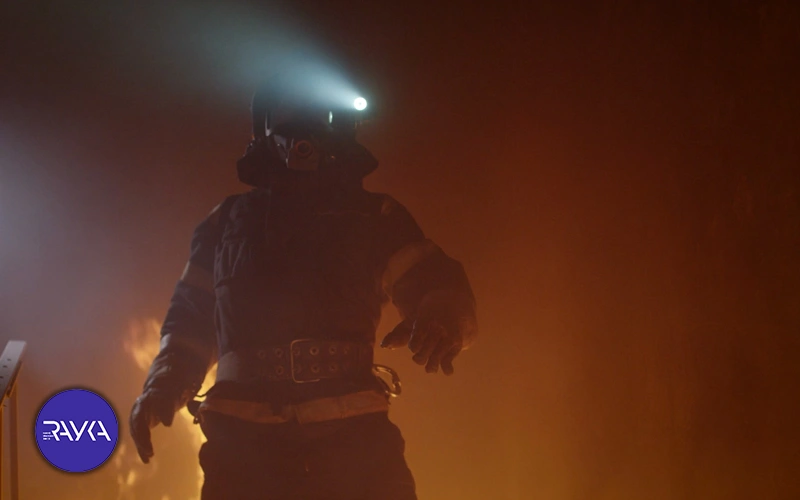
AI cannot make a film on its own. In Beyond the Fire, AI made it possible to create many of the project’s challenging elements; from visuals and environments to human faces, movement, and fire. However, turning these capabilities into cohesive shots and ultimately a cinematic narrative required professional decision-making and supervision throughout every stage of production.
For Raykamah, Beyond the Fire was an experience in using AI to create a cinematic world centered around fire and firefighting operations. In this project, AI made it possible to create and refine elements such as fire, smoke, the emergency environment, human faces, facial expressions, and firefighter movements, giving the production team greater flexibility in designing different situations.
However, what transformed these elements into a cohesive visual experience was not technology alone. Shot selection, character design, movement control, coordination between fire and the environment, visual continuity, and final refinement all required human expertise and supervision.
Beyond the Fire represents Raykamah’s approach to AI-assisted filmmaking: bringing technology together with the experience and expertise of a professional production team, so that a cinematic idea can move beyond an initial image and become a believable and engaging narrative.
Every idea deserves more than an ordinary visual. If you have a story, character, unique setting, or cinematic situation in mind, AI can open up new possibilities for bringing it to life.
By combining filmmaking expertise, art direction, and AI technology, Raykamah works alongside your project from the initial idea and visual world-building to character creation, environment design, cinematic shot production, and final refinement.
The experience of Beyond the Fire demonstrated that even complex elements such as fire, smoke, emergency environments, human faces, and movement can be created with AI. But achieving a professional result requires a team that knows how to direct and control the technology throughout the production process.
If you have an idea for a short film, cinematic narrative, or a distinctive video project, talk to Raykamah about bringing it to life.